

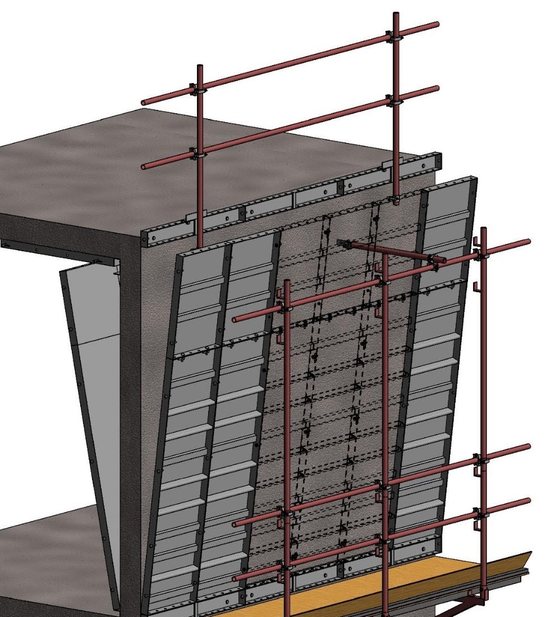
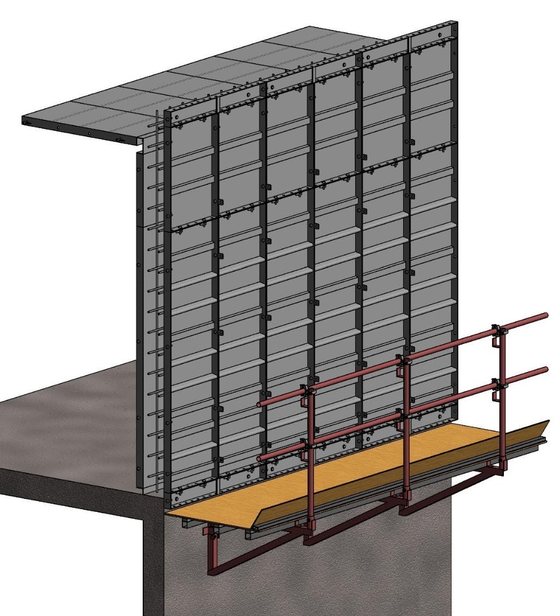
Aluminium formwork lets builders pour walls and slabs together, strip early and reuse the same panels hundreds of times. Here is the short version of how it works, and what to plan for.
- 3–4 daysoptimised floor cycle
- Up to 250panel reuses
- 1 : 3carpenter to helper ratio
- Zerotimber or plywood
Why aluminium?
Aluminium panels are light, strong and resistant to corrosion, and they keep a high salvage value at the end of their life. The bigger change is the method: monolithic casting. Walls, columns and floor slabs are poured in a single concrete pour instead of in separate stages.
- Stronger structure: better seismic behaviour and fewer construction joints, so less water leakage.
- Faster cycles: an average floor cycle of 6–7 days, and 3–4 days once the crew is practised.
- Less finishing: a smooth concrete face removes the need for plastering and for internal brickwork or blockwork.
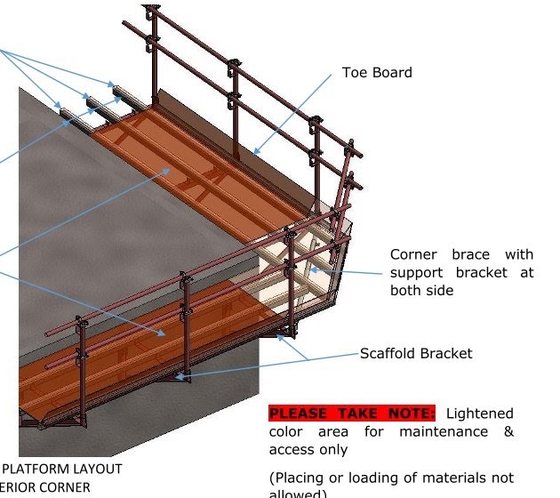
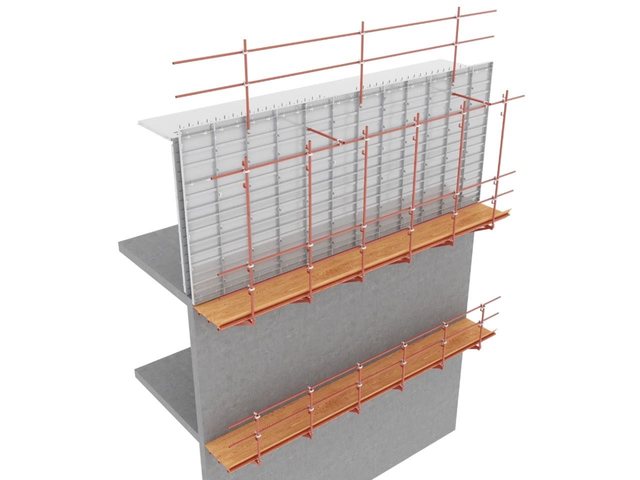
- Safer sites: perimeter working platforms are built into the system.
What the system is made of
The components fall into four groups:
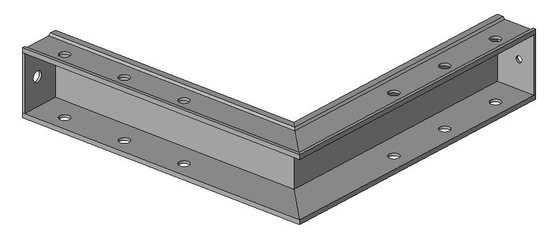
- Structural: wall panels, corners, deck panels and beams.
- Connection: pins, wedges and wall ties.
- Lifting and handling: such as the transfer box that passes parts up between floors.
- Scaffolding: working platforms and their brackets.
How it goes up on site
- Survey first. Set a benchmark on every floor and keep walls within 8 mm of vertical per floor.
- Erect walls from the corners, then fit ties and sleeves and check plumb.
- Lay the deck, working inward from the corners, and check levels before the pour.
- Strike early. Walls come off after roughly 10–15 hours and decks at about 36 hours, with props left in to carry the slab.
What to plan for
Aluminium formwork is not for every job. It needs high upfront investment, longer lead times when panels are imported, and a standardised design with floor heights up to about 3.4 m. It also calls for high-flow or self-compacting concrete, and missing custom parts can stall a pour. Good planning, component tracking and site security matter as much as the panels themselves.
Learn it properly
WIFT’s 150-hour certificate covers these topics through theory, drawing interpretation and hands-on practice.
Aluminium Formwork Module See the full programme →